
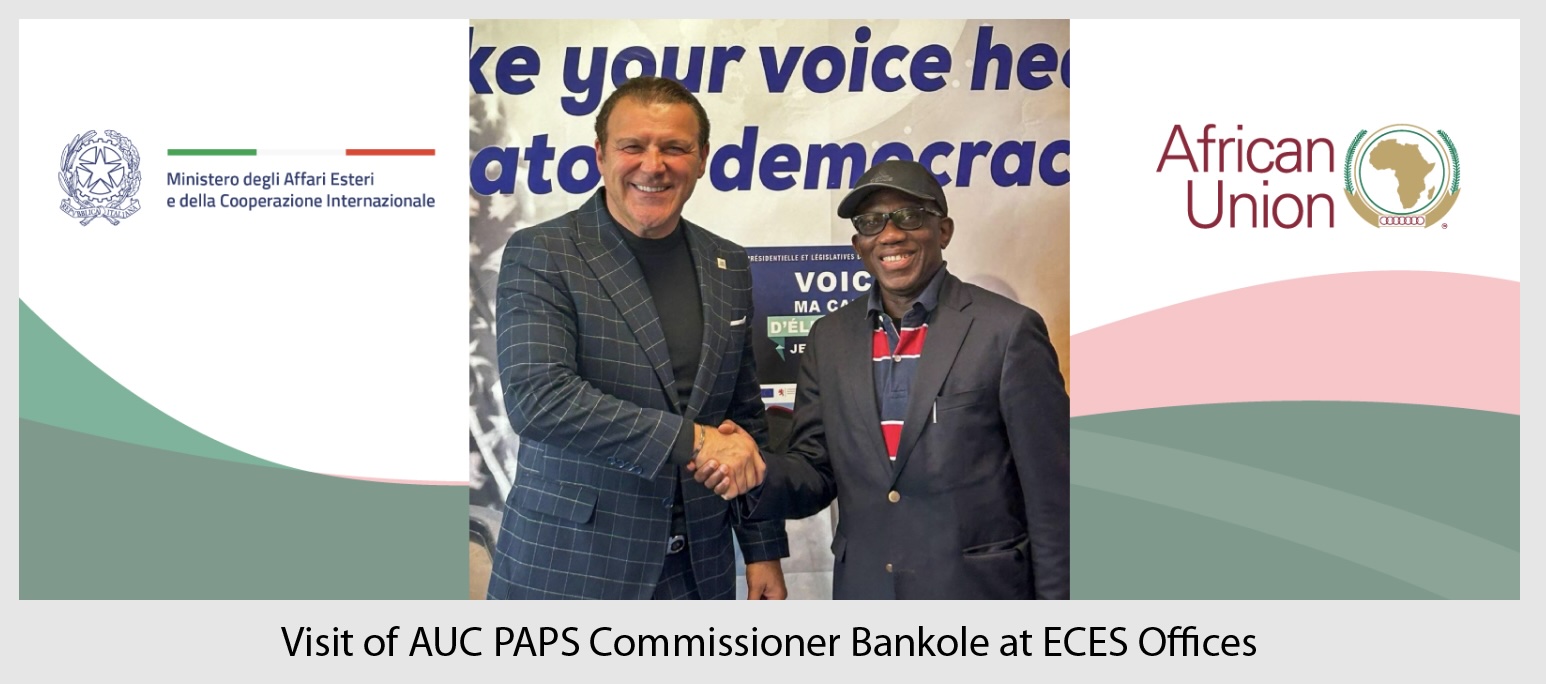
The Pro-Electoral Integrity project grew out of a Memorandum of Understanding (MoU) signed in May 2021 between ECES and AUC-PAPS. The MoU committed the two institutions to closer collaboration — through regular consultation, joint activities, and the exchange of expertise — to promote electoral integrity, prevent electoral conflict and violence, and advance human rights and women's political participation. The project was conceived as the concrete means of putting that commitment into practice.
It also drew on an earlier Italian-funded initiative, Innov-Elections. Launched in December 2020 under Italy's "Partnership with Africa" policy and delivered with the Sant'Anna School of Advanced Studies of Pisa and UNITAR, Innov-Elections reached 35 countries and more than 1,000 representatives of African Electoral Management Bodies — establishing the relationships and working methods on which Pro-Electoral Integrity would later build.
Phase 1 established the cooperation with the African Union. It supported the revival of the Association of African Election Authorities (AAEA), the 7th Annual Continental Forum of EMBs in Mozambique, the validation of the AU Methodological Guide on Electoral Assistance, the AU Guidelines on Constitutional Amendments, and the 6th African Forum on Transitional Justice.
Phase 2 consolidated and expanded the cooperation, delivering several important activities. These included the 8th Continental Forum of EMBs in Benin, the development of ACDEG materials for school curricula, AAEA Peer learning missions to Liberia and Comoros, the first annual meeting of the Declaration of Principles for International Election Observation held in Addis Abeba, and the 7th African Forum on Transitional Justice.
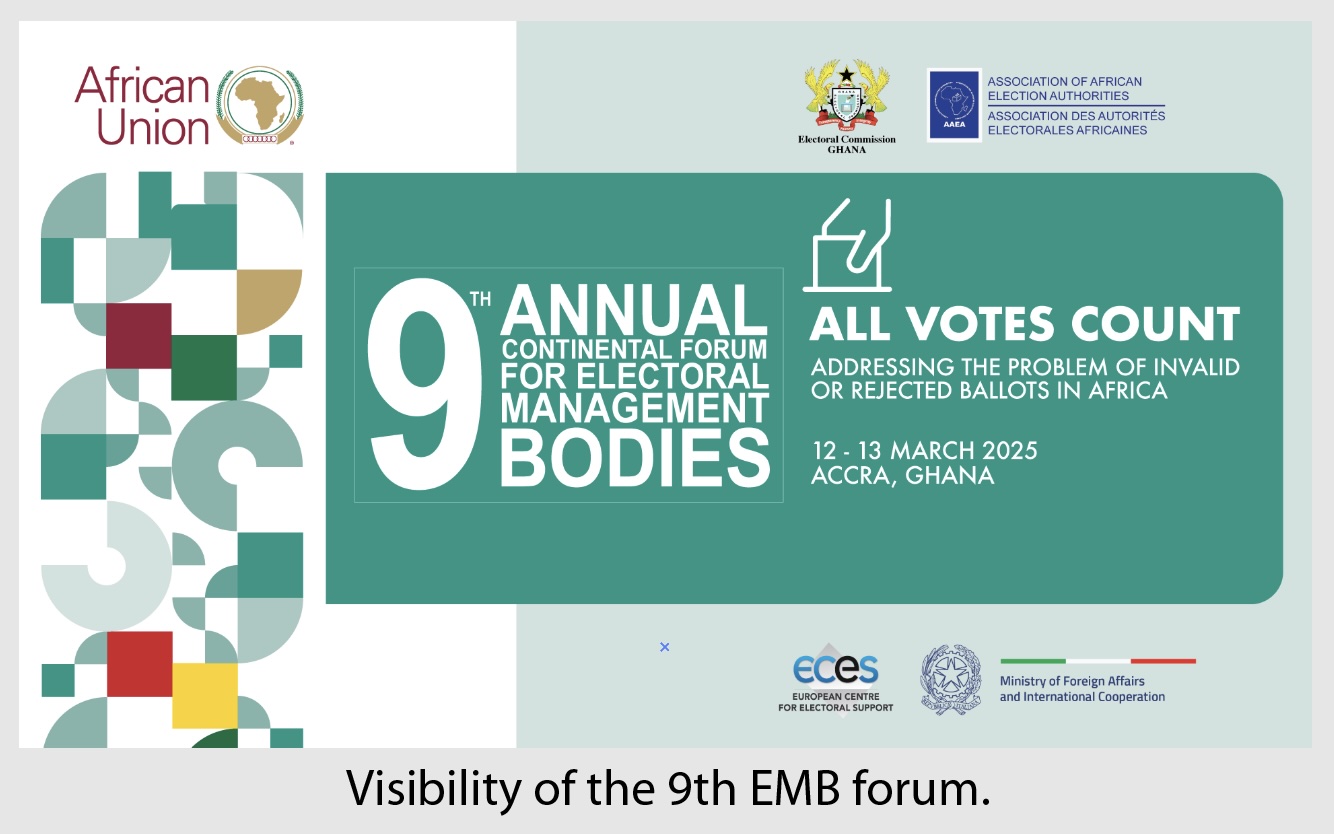
Phase 3 expands the project's operational dimension, accompanying electoral processes in demanding political contexts — including countries in transition after unconstitutional changes of government. It has supported the 9th Annual Continental Forum of EMBs in Ghana, the 8th and 9th African Forum on Transitional Justice, 10 peer learning missions in Namibia, Ghana, Gabon, Burundi, Malawi, Cameroon, Ivory Coast, Benin, Djibouti, and Italy, and the final validation and piloting of the ACDEG school materials in West Africa.
With each phase, the cooperation has grown in scope and ambition, evolving from a first set of joint activities into a sustained, continent-wide partnership for democratic governance — anchored in the African Union's Agenda 2063 and in Italy's long-term engagement in Africa.